Three taps from group chat to first serve.
No accounts for players, no printed sheets, no human whiteboard. Here's what actually happens on a FourUp night, screen by screen.
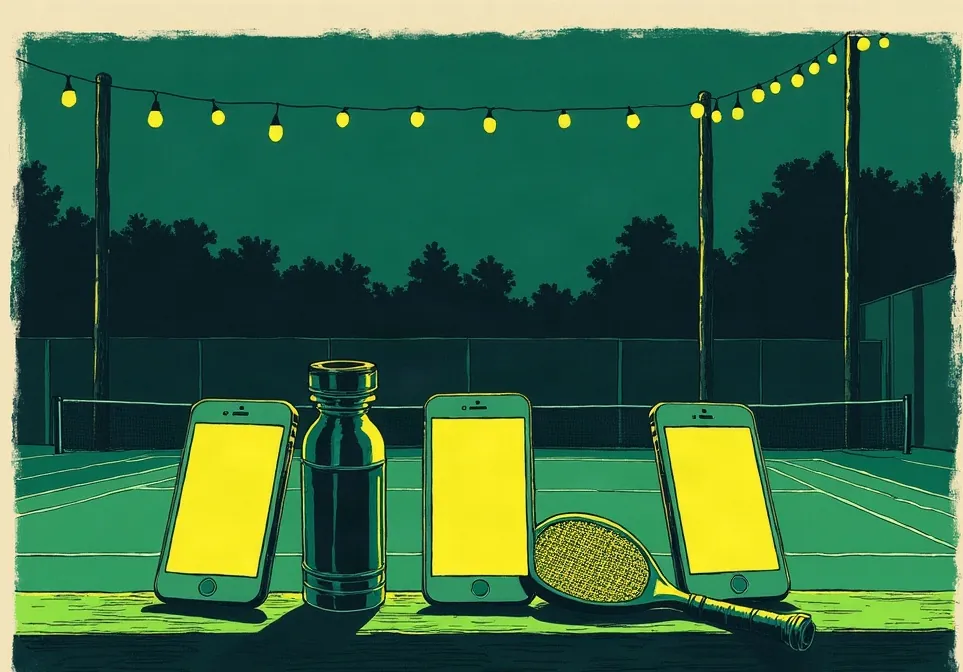
Paste the list.
Copy the sign-up thread from Viber or Messenger and paste it. Names are enough; levels are optional and can be fixed later. Or post one invite link the night before and let people add themselves.
Every name becomes a player with a fair place in line — no spreadsheet, no numbering.
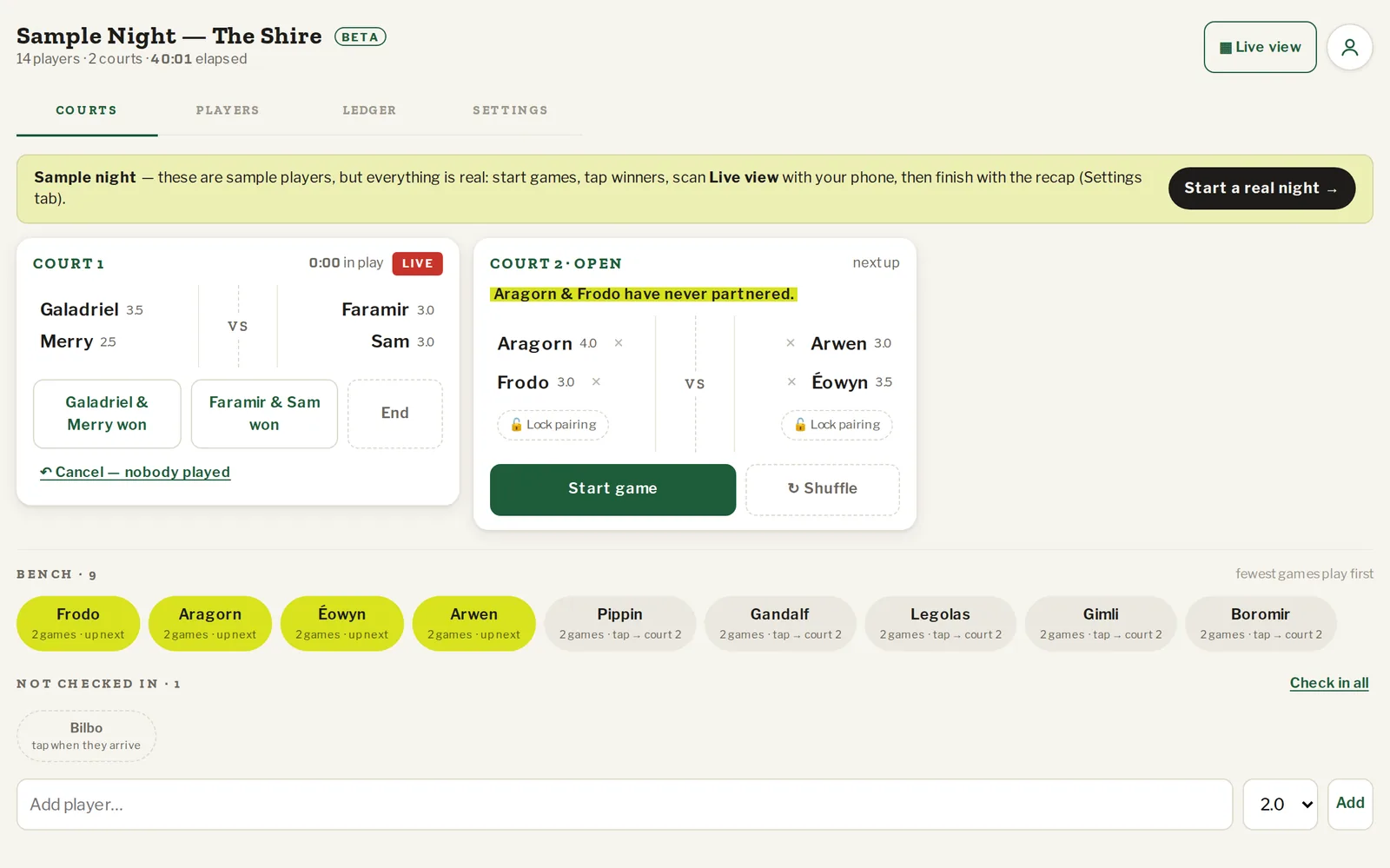
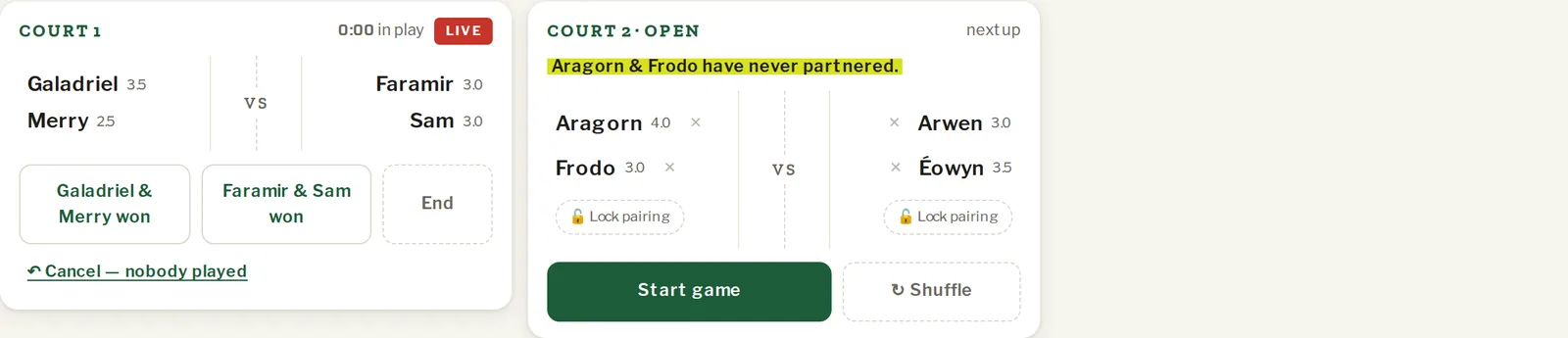
Tap Start.
Each court gets its next four with the reason written out — “Merry & Pippin have never partnered.” Don't like it? Swap a player, lock a pairing, shuffle. When a game ends, tap the winners and the court is re-dealt instantly; the score is a one-tap afterthought.
The engine keeps sit-outs fair (fewest games play first), mixes partners and opponents, and never sends the same four straight back out.
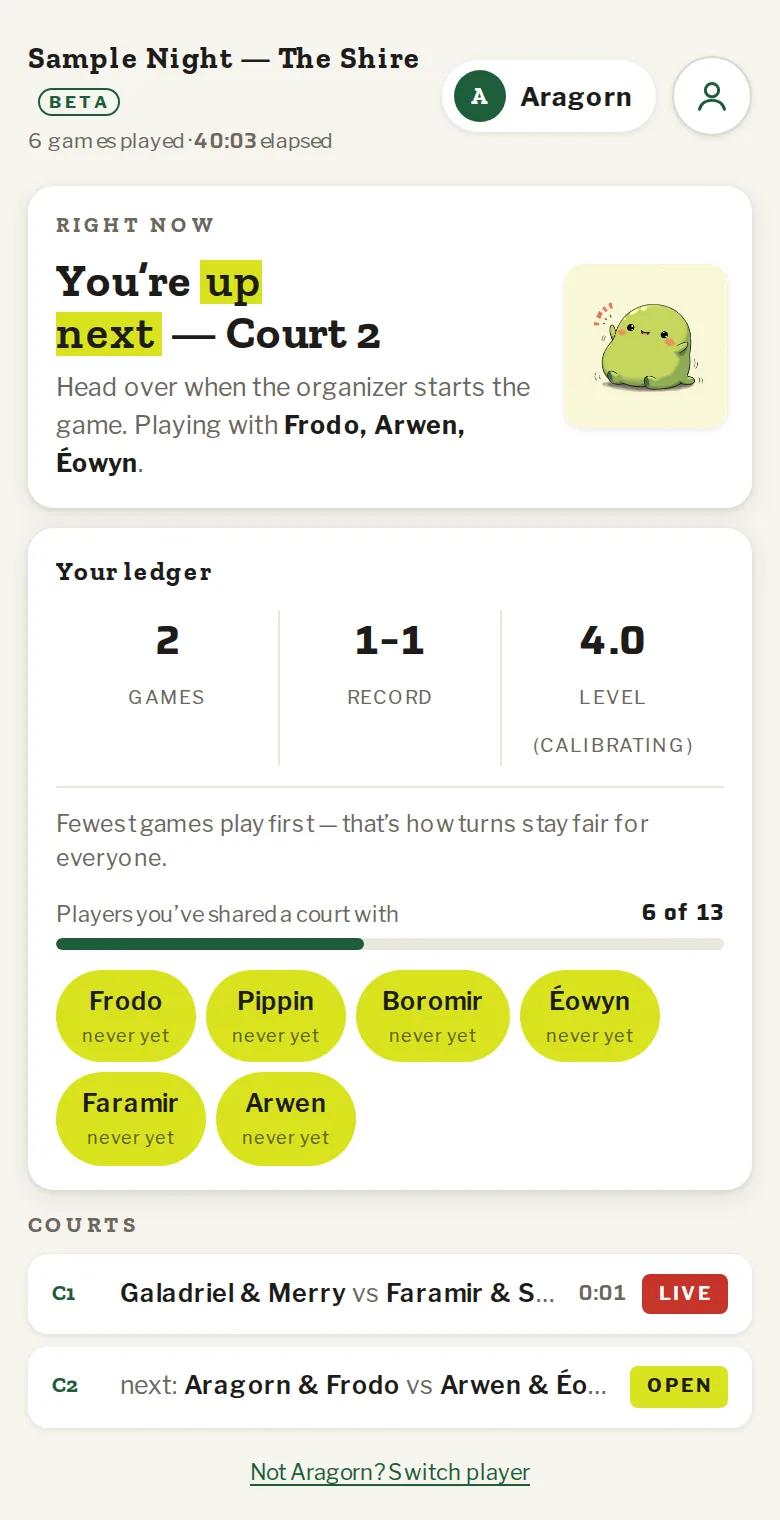
Everyone knows what's next.
One QR on the fence. Players tap their name and see their court, their partner, and how many are ahead of them. They check themselves in, mark themselves away, and report the winner — from their own phone.
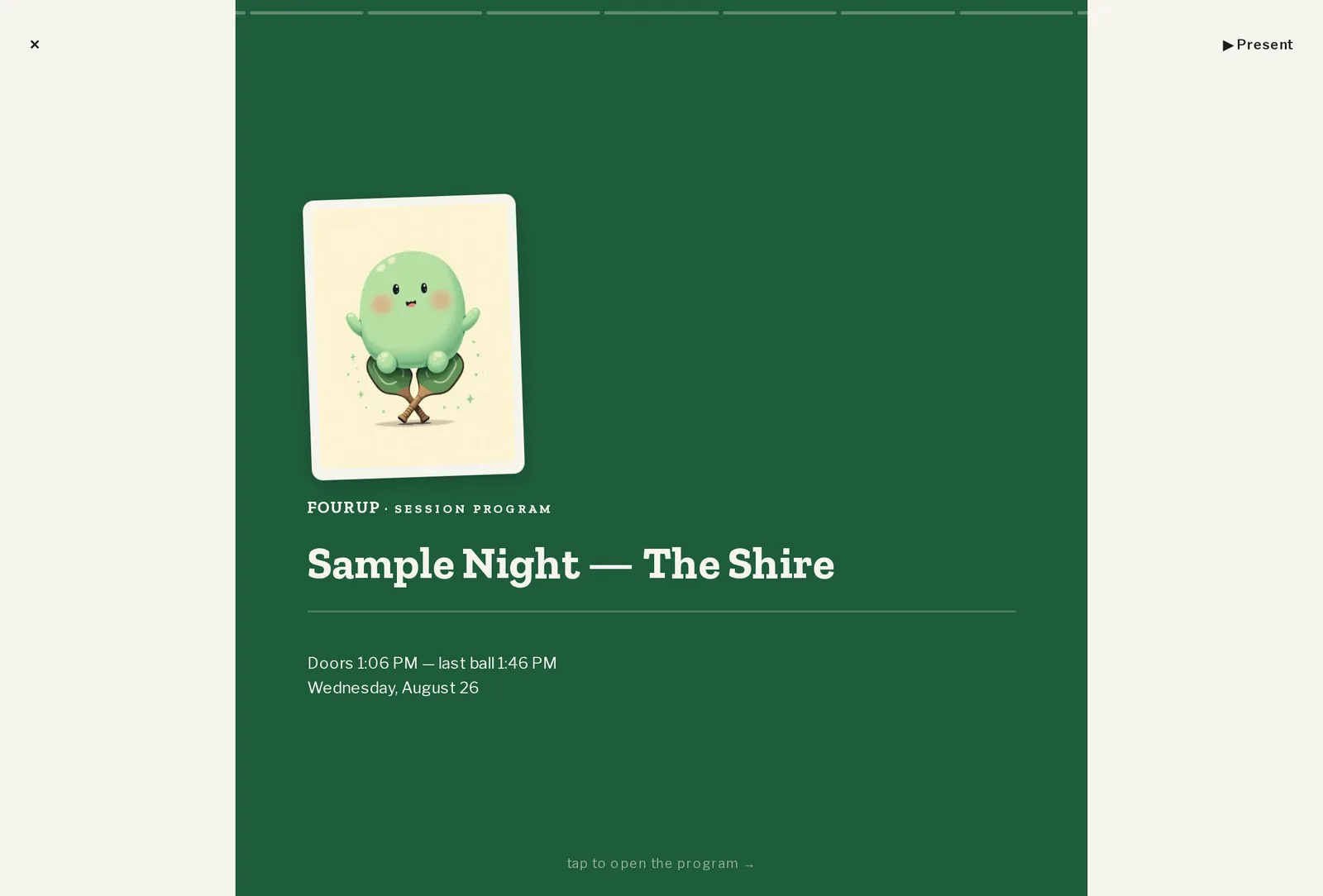
At the end, the recap plays: the night's program, awards, podium, one shareable card for the group chat.
A recap worth sharing.
Games, partnerships, the closest game, awards like Social Butterfly and Iron Paddle, and the podium — then one card for the group chat and a shareable link.
Questions organizers ask
Do players need to install anything?
No. They scan the QR once and the live view opens in their browser. Organizers can install FourUp as an app so it works offline, but that's optional too.
What if someone arrives late or has to leave?
Add them from the bench at any time — they enter the rotation at the median games so they're not skipped or favoured. Anyone can mark themselves away from their phone and come back later.
Can I override the engine?
Always. Tap ✕ on a name to swap them (or let FourUp pick the replacement), lock a pairing so two people stay partners, shuffle a court, or cancel a game started by mistake.
How does it decide who plays next?
Fewest games first, always. Among those, it scores every possible four against who has already partnered and opposed whom tonight, and never puts the same four straight back on a court.
Does it work without signal?
Yes — the organizer's device runs the whole night locally and syncs when it's back online. Players' phones need signal to follow along; without it they look at your screen, same as today.
Bring it to your next night.
No plans, no card, no sign-up to run a night. Paste the names and start.